How to Find Your Perfect Foundation Shade Every Time
Finding the right foundation shade might be one of the most frustrating parts of buying makeup. You swatch something in the store and it looks perfect, but then you get home and suddenly you look like you’re wearing a mask. Or you order online based on a shade description, and it arrives three shades too dark or weirdly orange.
We’ve all been there, and it’s the worst. Foundation is supposed to make your skin look better, not like you borrowed someone else’s face. But here’s the good news: finding your perfect match doesn’t have to be a guessing game. Once you know what to look for and how to test properly, you can find your shade every single time.
Let’s break down everything you need to know about finding a foundation that actually matches your skin, whether you’re shopping in person or online.

Understanding Your Undertone (This Is Key)
Before you even start looking at foundation shades, you need to figure out your undertone. This is honestly the most important part of finding a foundation match, and it’s where most people go wrong.
Your undertone is the subtle hue underneath the surface of your skin, and it stays pretty consistent regardless of whether you tan or get paler. There are three main undertones: cool, warm, and neutral.
Cool undertones have pink, red, or bluish hues. If you have cool undertones, silver jewelry typically looks better on you than gold, and your veins appear more blue or purple than green.
Warm undertones have yellow, peachy, or golden hues. Gold jewelry tends to be more flattering, and your veins look more green than blue.
Neutral undertones are a mix of both warm and cool. You can probably wear both silver and gold jewelry equally well, and your veins might look blue-green.
Here’s a quick test: look at the veins on the inside of your wrist in natural light. Blue or purple veins usually indicate cool undertones, green veins suggest warm undertones, and if you can’t really tell or they look blue-green, you’re probably neutral.
Another test? Think about how your skin reacts to the sun. Cool undertones tend to burn easily and have difficulty tanning, while warm undertones usually tan more easily. Neutral undertones fall somewhere in between.
Getting your undertone wrong is why foundation can look orange, pink, or just “off” even if the depth seems right. A foundation might be the perfect lightness or darkness for your skin, but if the undertone doesn’t match, it’s never going to look natural.
Understanding Foundation Shade Names
Foundation shade naming systems are all over the place, which doesn’t exactly make things easier. Different brands use different systems, but here’s what you’ll generally see:
Most brands use letters to indicate undertone. C stands for cool (pink undertones), W means warm (yellow or golden undertones), and N is neutral. Some brands use NC (neutral cool) and NW (neutral warm), which can be confusing because it seems backward—NC actually has warm undertones and NW has cool undertones. Thanks, MAC.
Numbers typically indicate depth—how light or dark the shade is. Lower numbers are usually lighter, higher numbers are deeper. Some brands use descriptive names like “porcelain,” “sand,” “caramel,” or “espresso” to give you a general idea, though these can be pretty subjective.
The Maybelline Fit Me Matte + Poreless Foundation does a good job with their numbering system. Shades ending in 0 are for neutral undertones, shades ending in 2 are warm, and shades ending in 5 or 8 are cool. Once you crack the code, it makes shopping way easier.
How to Test Foundation Shades in Store
If you have the option to test foundation in person, that’s always going to be your best bet. But you need to test it the right way. Here’s exactly how to do it:
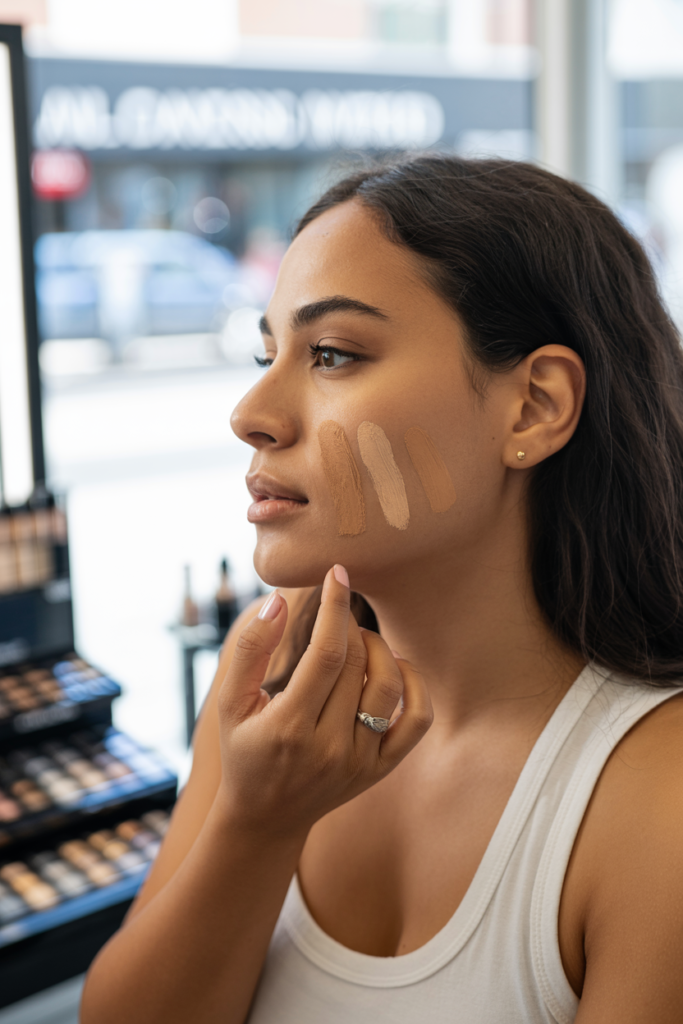
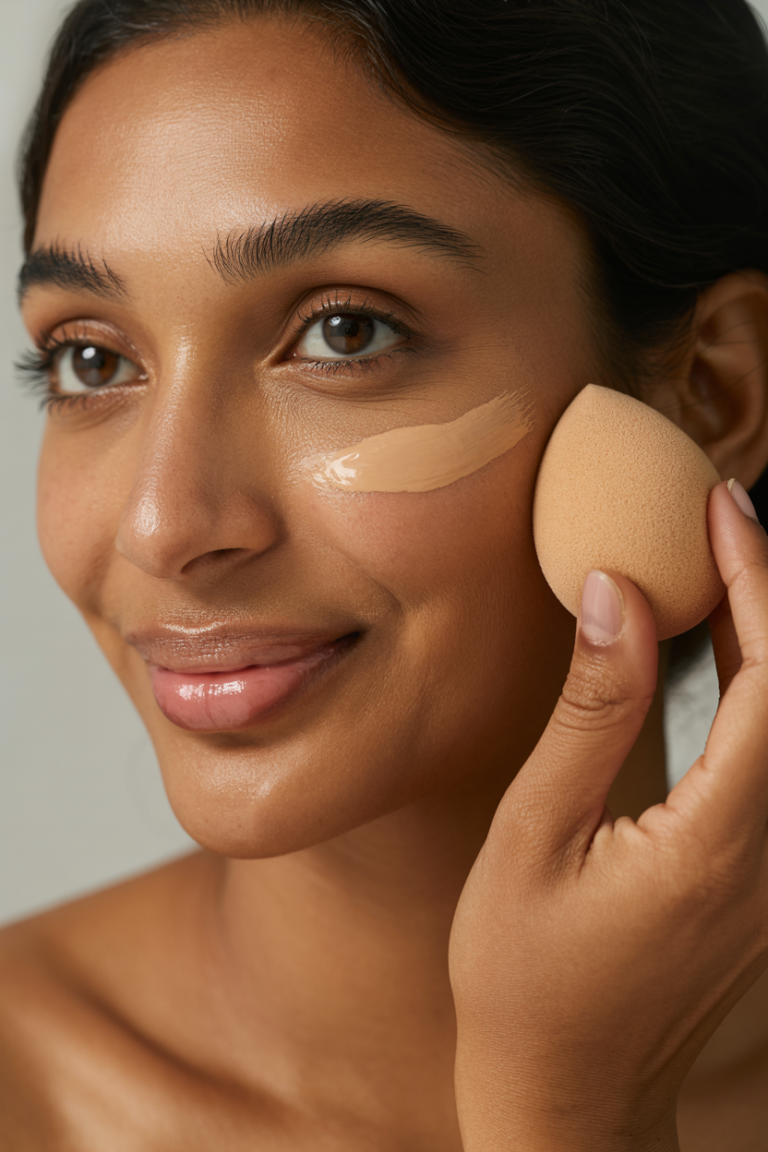
Test on your jawline, not your hand or wrist. This is crucial. Your hands and wrists are almost always a different color than your face. The goal is to find a foundation that matches your face and blends seamlessly into your neck, so test it right where your jaw meets your neck.
Test in natural light. Store lighting is notoriously deceptive. Those fluorescent lights can make everything look different than it will in real life. After you apply a few test shades, step outside or go near a window to check them in natural daylight. The shade that disappears into your skin is your match.
Test at least three shades. Don’t just grab one and hope for the best. Test the shade you think is right, plus one lighter and one darker. This gives you a better sense of which one actually matches. Sometimes what looks right in the bottle looks completely different on your skin.
Give it time to oxidize. Some foundations change color as they dry down and react with your skin’s natural oils. This is called oxidizing. Let the test swatches sit for at least 10-15 minutes before making your final decision. A shade that looks perfect when wet might turn orange after it sets.
Check the color against both your face and neck. Your face and neck might be slightly different colors, especially if you wear sunscreen on your face (which you should). Your foundation should match your face but not create a dramatic line where it meets your neck. If you can see a clear difference, that’s not the right shade.
Don’t let sales associates pressure you into a shade that doesn’t feel right. You’re the one who has to wear it, and you know your skin better than anyone else.
How to Find Your Shade When Shopping Online
Shopping for foundation online is trickier, but it’s doable if you know what information to look for. Here’s how to increase your chances of getting it right:

Use shade matching tools. Many brands now have online shade finders where you can input your skin tone and undertone or even upload a photo. The L’Oreal True Match shade finder is particularly helpful and works across drugstore and higher-end brands.
Check if brands list shade matches. Some brands will tell you that if you wear a certain shade in another foundation, you’d be a specific shade in theirs. This is super helpful if you already have a foundation you love but want to try something new.
Read reviews from people with similar skin tones. Look for reviewers who mention their undertone and what other foundation shades they wear. If someone says they’re usually a “light neutral” and lists foundations you also wear, their review is going to be more helpful than a generic one.
Look at swatches on different skin tones. Many beauty bloggers and YouTubers swatch foundations on their arms or show how they look on their face. Search for swatches of the shade you’re considering on people with similar coloring to yours.
Start with brands that have generous return policies. If you’re not sure, buy from somewhere that allows returns or exchanges. Sephora, Ulta, and most department stores will let you return opened makeup if it doesn’t work out. Keep your receipt and the packaging, just in case.
Order samples if possible. Some online retailers sell sample sizes, or you can request samples from beauty counters. The Fenty Beauty Pro Filt’r Soft Matte Foundation comes in sample sizes at Sephora, which is perfect for testing before committing to a full bottle.
What to Do If You’re Between Shades
Sometimes you’ll find that you’re right between two shades, or maybe you need different shades for summer and winter. Here’s how to handle it:
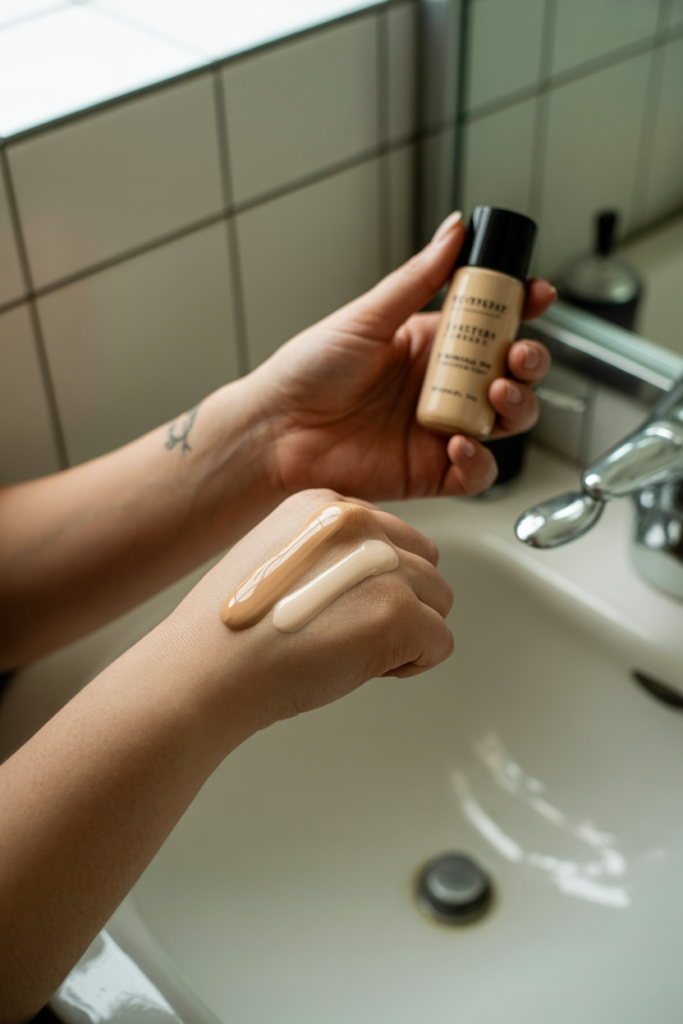
Buy both and mix them. This might seem extra, but mixing two shades gives you complete control over your perfect match. As your skin tone changes with the seasons, you can adjust the ratio. Plus, both bottles will last twice as long since you’re only using half of each.
Get the lighter shade and deepen it. It’s easier to make a foundation darker than lighter. You can mix in a drop of a darker shade or use a slightly deeper powder to adjust the color. The NYX Professional Makeup Born to Glow Naturally Radiant Foundation has a wide shade range that makes it easy to find a close match you can tweak.
Use the darker shade in summer, lighter in winter. If you tan or your skin tone shifts with the seasons, having two shades on rotation makes sense. Use the deeper one when you have more color and switch to the lighter one when you’re paler.
Try a shade-adjusting mixer. Brands like The Body Shop and NYX make foundation adjusters that you can mix into your foundation to make it lighter, darker, more pink, or more yellow. These are lifesavers if you have a foundation you love but the shade isn’t quite right.
Consider Your Foundation Formula
Here’s something people don’t always think about: the formula of your foundation can affect how the shade looks on your skin.
Matte foundations tend to look slightly lighter and can emphasize texture, so you might need to go half a shade darker than you would with a dewier formula.
Dewy or luminous foundations can look slightly darker and more saturated because they reflect light differently. You might actually need a shade lighter than you think.
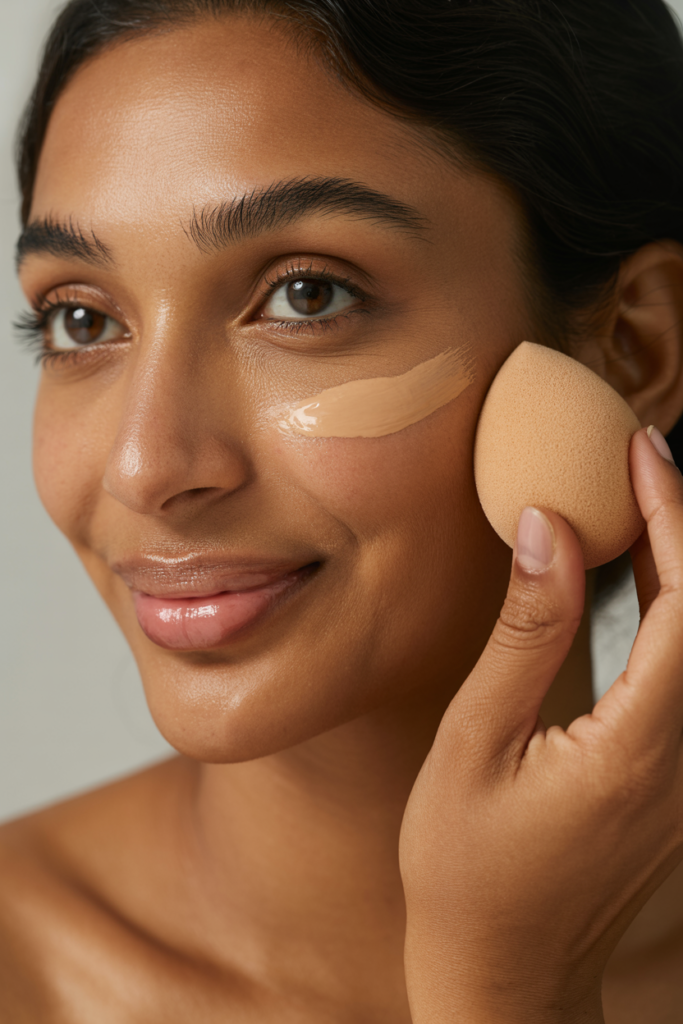
Sheer or light coverage foundations are more forgiving with shade matching since they’re not completely opaque. You have a bit more wiggle room here.
Full coverage foundations need to be pretty much spot-on since they’re going to cover most of your natural skin tone. There’s less room for error.
The e.l.f. Soft Glam Foundation is a good budget option that comes in a solid shade range and has buildable coverage, so it’s forgiving if your shade match isn’t 100% perfect.
Special Considerations
If you have redness: You might need a foundation that’s slightly less pink or more neutral than your undertone would suggest. A lot of people with cool undertones have redness, but a super pink foundation will just amplify it.
If you have hyperpigmentation: Your face might have areas of different colors. Match your foundation to the majority of your face, not the darkest or lightest spots. You can use color corrector and concealer to address specific areas of discoloration.
If you wear glasses: Check your foundation match around your nose and the sides of your face where your glasses sit. Sometimes these areas can be slightly different in color from rubbing or pressure.
If you have a beard or facial hair: You might need to adjust your foundation shade slightly depending on how much of your natural skin shows through. Test foundation in the areas where you’ll actually be applying it.
Don’t Forget About Your Neck and Chest
Your foundation doesn’t have to match your neck exactly, but it shouldn’t be noticeably different either. Here’s the thing: a lot of people have faces that are slightly different in color than their necks, especially if they wear sunscreen religiously on their face (which, again, you should be doing).
The goal is to find a balance. Your foundation should look natural against your neck without creating a harsh line. If there’s a slight difference between your face and neck, you can blend your foundation down onto your neck a bit, or use a lighter hand when applying near your jawline.
Some makeup artists recommend matching your foundation to your chest instead of your face or neck, especially if your chest sees more sun exposure than your neck. Try testing shades on your chest as another reference point.
Testing Day vs. Night Application
Here’s a pro tip: if possible, see how your foundation looks in different lighting situations. A shade that looks perfect in natural daylight might look completely different under indoor lighting, flash photography, or outdoor evening light.
If you’re buying foundation for a specific event or for wearing at night, try to check how it looks in similar lighting. Flash photography, in particular, can make foundations look lighter or create a white cast, especially if they contain SPF.
When to Just Ask for Help
If you’re really struggling to find your shade, don’t be afraid to ask for professional help. Many makeup counters and beauty stores have associates trained in color matching. Just remember that they’re using store lighting, so still check the shade outside before you commit.
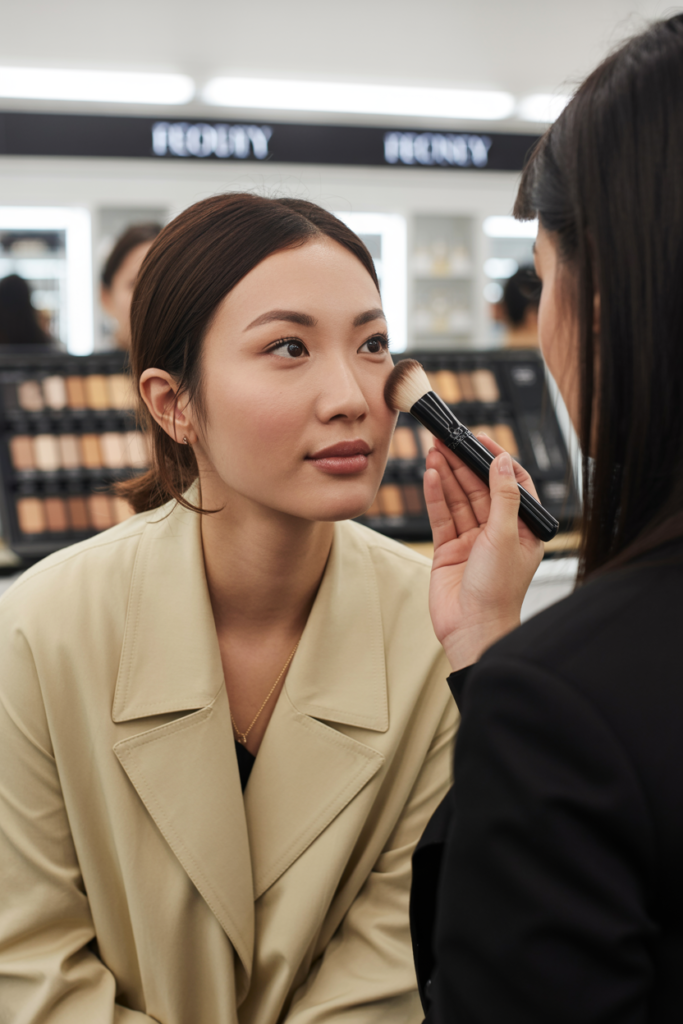
You can also book a makeup consultation at places like Sephora, Ulta, or department store beauty counters. They’ll help you find your undertone, test multiple shades, and can give you samples to try at home.
Some dermatology offices and medical spas also offer color matching services, especially if you’re investing in higher-end foundation.
The Bottom Line
Finding your perfect foundation shade takes a little effort upfront, but once you nail it, buying foundation becomes so much easier. You’ll know your undertone, you’ll know what to look for in shade names, and you’ll know how to test properly.
Remember: test on your jawline in natural light, let it oxidize, and don’t be afraid to try multiple shades before deciding. Your perfect match is out there, and now you know exactly how to find it. No more orange faces or weird mask-like lines. Just foundation that actually looks like your skin, only better.

This post contains affiliate links, meaning I may earn a small commission from your purchases at no extra cost to you.