Skincare for Neurodivergent People: Simplifying Your Routine
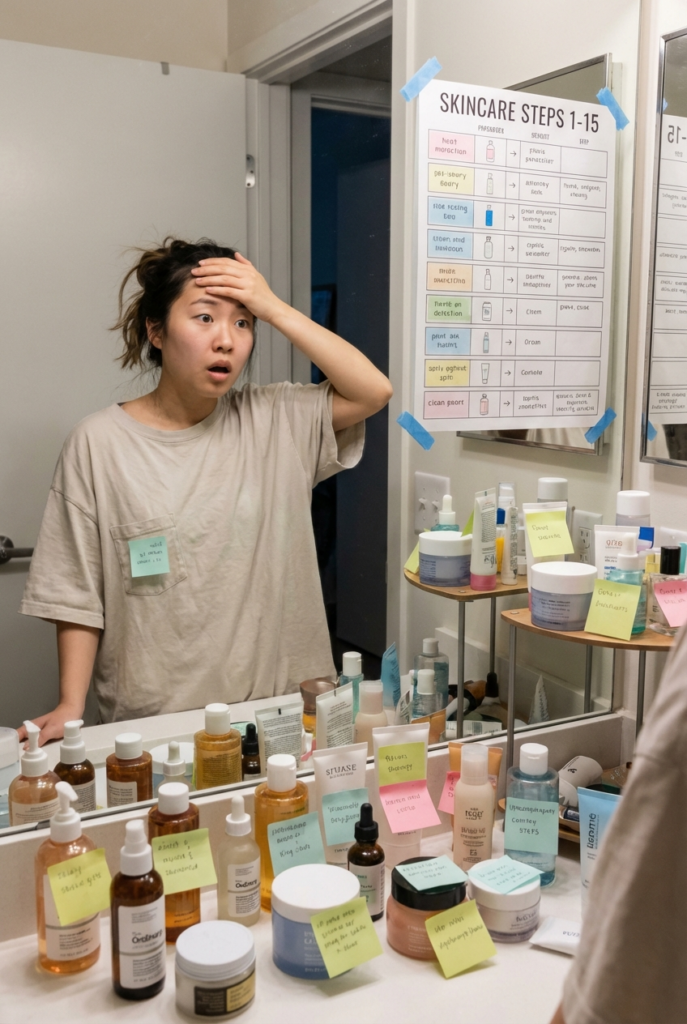
If you’ve ever stood in front of your bathroom counter feeling completely overwhelmed by the seven-step routine you should be doing but can’t seem to stick to, you’re not alone. For neurodivergent folks—whether you have ADHD, autism, sensory processing differences, or other neurological variations—skincare can feel like navigating a sensory minefield while simultaneously trying to remember if you already washed your face or just thought about washing your face.
The beauty industry loves to tell us we need twelve products applied in a specific order at exact times of day, but here’s the truth: the best skincare routine is the one you’ll actually do. Let’s talk about building a routine that works with your brain, not against it.
Why Traditional Skincare Advice Doesn’t Work for Everyone
Most skincare advice assumes everyone processes sensory input the same way, has consistent executive function, and can maintain complex routines indefinitely. But if you’re neurodivergent, you might struggle with:
Sensory sensitivities: Strong fragrances, sticky textures, or products that leave residue can range from mildly annoying to genuinely distressing. That “luxurious” face cream everyone raves about might feel like having oil slicked across your face for hours.
Executive dysfunction: Remembering multiple steps, doing them in order, and maintaining consistency can be genuinely difficult—not because you don’t care, but because your brain works differently.
Decision fatigue: When you have twenty products and need to figure out which ones to use when, the whole routine becomes so mentally exhausting that you just… don’t do it.
Routine disruption: Any change to your schedule can throw off your entire skincare routine for days or weeks.
The good news? You can absolutely have healthy, happy skin while accommodating these challenges.
Start With the Absolute Basics
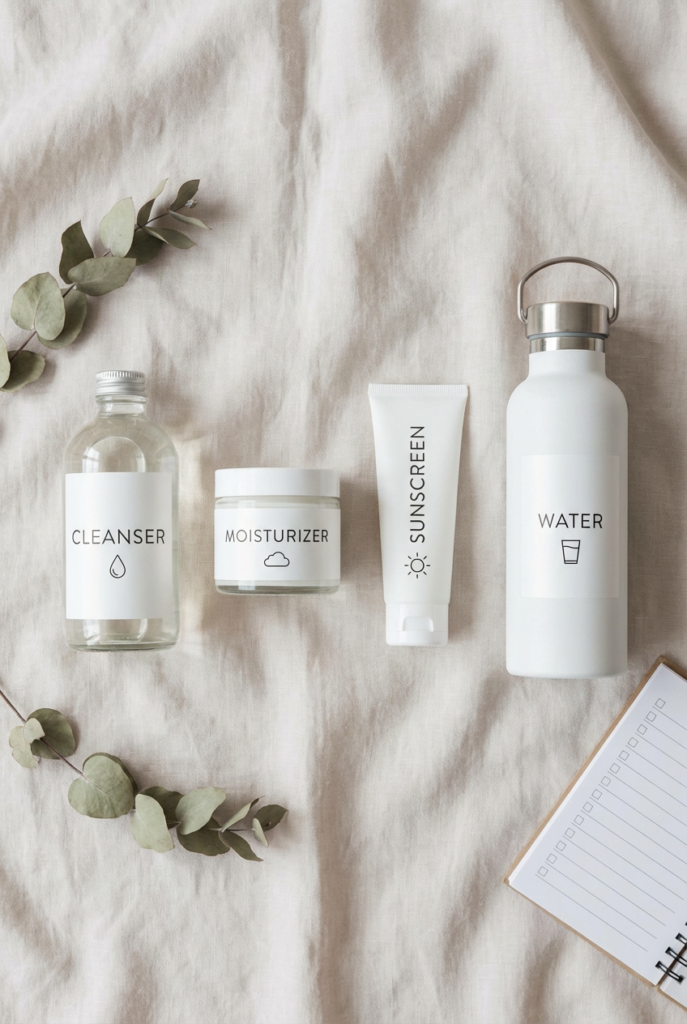
Forget everything you’ve heard about ten-step routines. Let’s build from the ground up with what your skin actually needs:
Morning:
- Rinse with water (or use a gentle cleanser if you’re oily)
- Sunscreen
Night:
- Cleanser
- Moisturizer
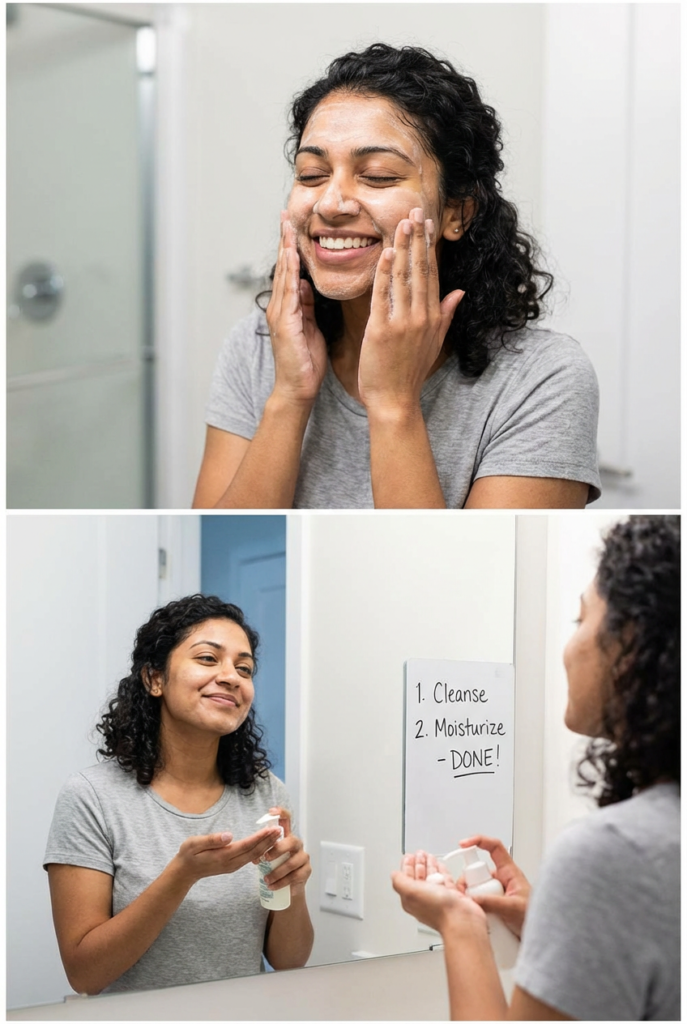
That’s it. Seriously. If you can consistently do these four things, you’re doing better than most people who buy elaborate routines and use them twice.
Once these become automatic—and I mean truly automatic, not just something you remember most days—you can consider adding treatments like vitamin C serums for brightening or acids for texture. But there’s zero shame in sticking with basics forever if that’s what works for you.
Sensory-Friendly Product Selection
The texture and scent of your products can make or break your entire routine. Here’s how to find products that won’t make you want to immediately wash them off:
For texture sensitivities:
- Gel cleansers and moisturizers absorb quickly and don’t leave that heavy, occlusive feeling
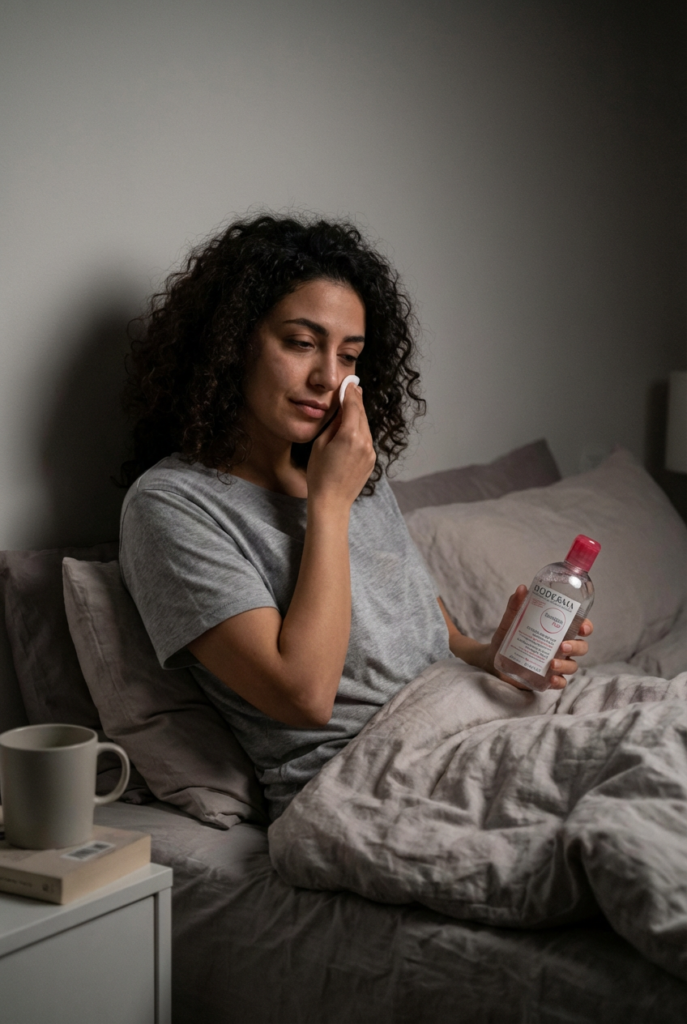
- Micellar water requires no rinsing and feels like water (perfect for days when washing your face feels impossible)
- Lightweight lotions instead of thick creams
- Powder or stick sunscreens for reapplication if traditional sunscreen texture bothers you

For scent sensitivities:
- Look for “fragrance-free” (not just “unscented,” which can still contain masking fragrances)
- Korean and Japanese skincare brands often have more options with minimal to no fragrance
- Be aware that some “natural” ingredients like essential oils can be stronger than synthetic fragrances
For combination sensitivities:
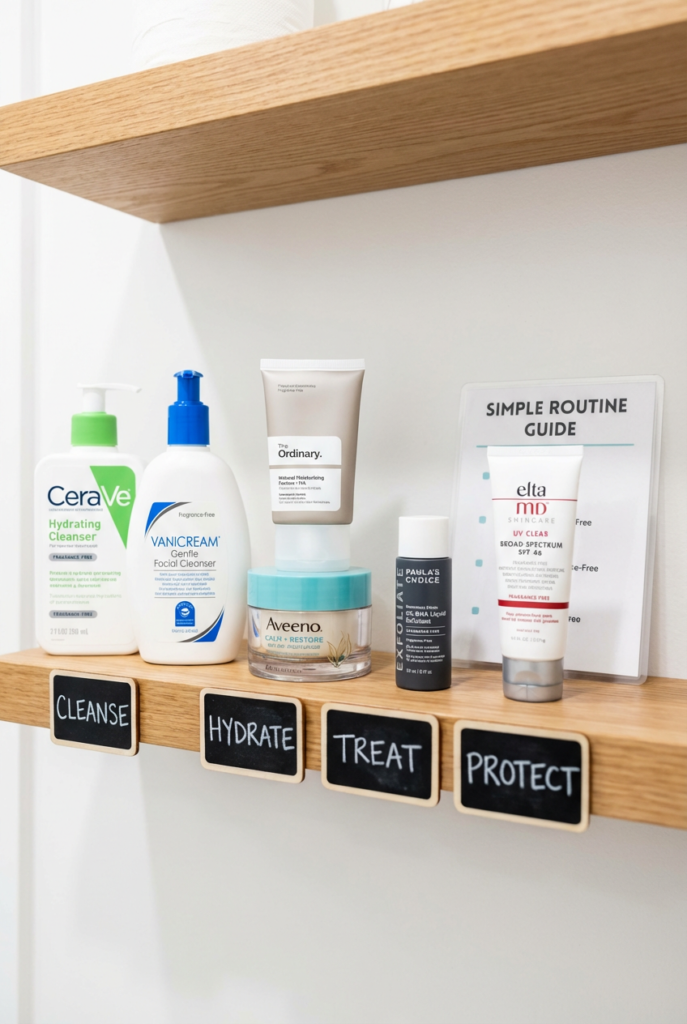
- CeraVe products are generally fragrance-free with simple textures
- La Roche-Posay offers gentle, no-frills formulations
- The Ordinary has basic formulations without unnecessary ingredients (though you’ll want to research which products to combine)
Executive Function-Friendly Strategies
Your skincare routine needs to accommodate your brain’s working style. Here are strategies that actually help:
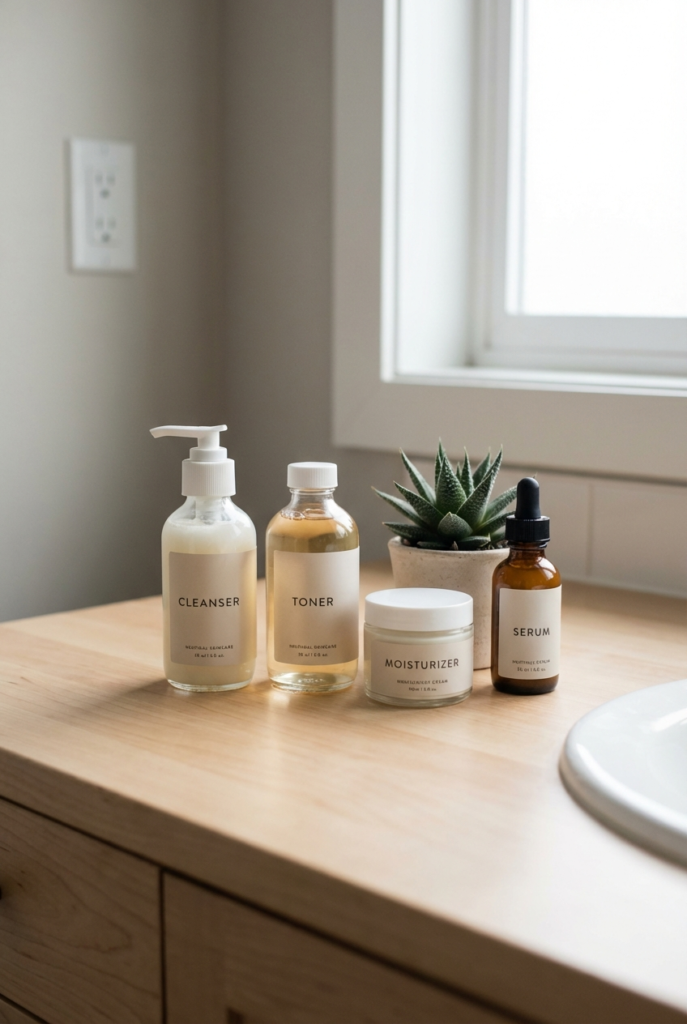
Make it visible: Keep your products exactly where you’ll use them. If you wash your face in the shower, your cleanser lives in the shower. If you forget to do skincare unless you see it, keep products on the counter, not in a drawer.
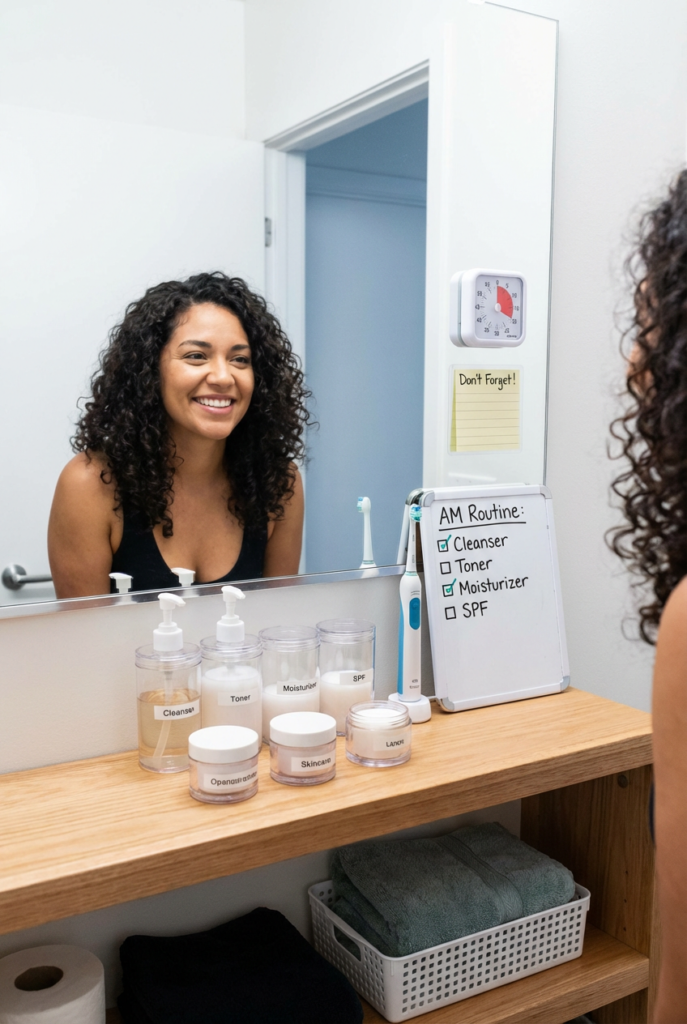
Reduce decision-making: Use the same products morning and night when possible. One good cleanser, one good moisturizer, one good sunscreen. Done.
Create external reminders:
- Phone alarms labeled “wash face” and “put on sunscreen”
- Habit stacking (do skincare right after brushing teeth)
- Visual reminders like sticky notes on your bathroom mirror
Embrace “good enough”: Skincare at 70% consistency is infinitely better than a perfect routine you do 10% of the time. Washed your face but forgot moisturizer? That still counts. Used micellar water instead of properly cleansing? That’s fine.
Prep for bad brain days: Keep face wipes or micellar water by your bed for nights when getting to the bathroom feels impossible. It’s not ideal every night, but it’s way better than sleeping in makeup or sunscreen.
Building a Simplified Routine That Works
Let’s create a realistic routine based on your specific needs:
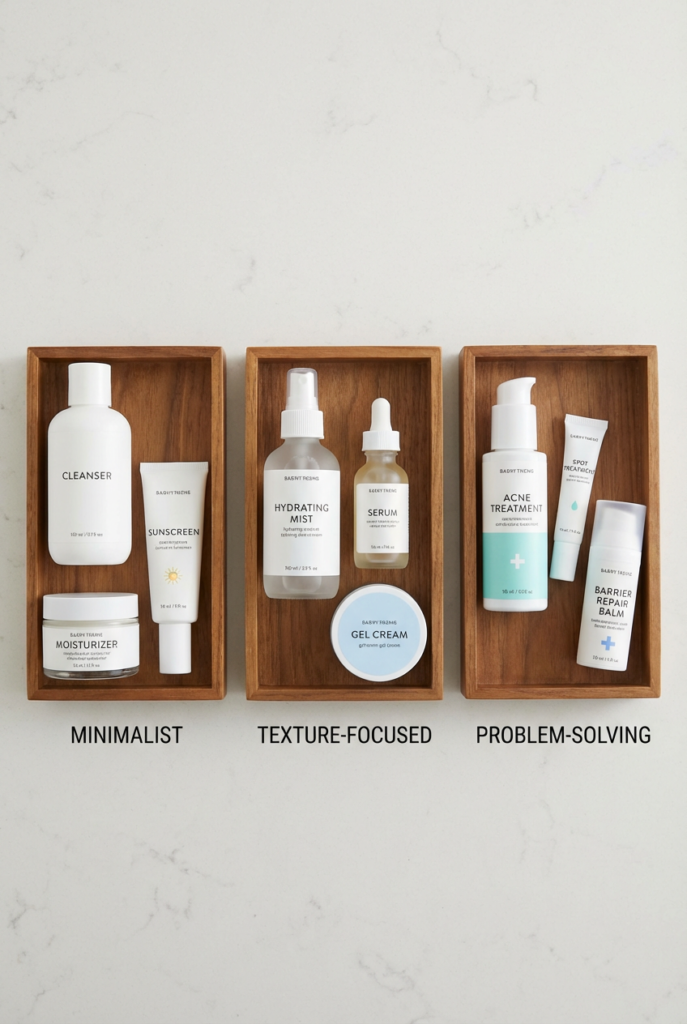
The Minimalist (2-3 products):
- AM: Splash with water, sunscreen
- PM: Micellar water, moisturizer
This works if you have relatively uncomplicated skin and just need the basics.
The Texture-Focused Routine (4-5 products):
- AM: Water rinse, vitamin C serum, sunscreen
- PM: Oil cleanser, gentle cleanser, moisturizer
This accommodates common concerns like uneven tone or rough texture without getting overwhelming.
The Problem-Solving Routine (5-6 products):
- AM: Gentle cleanser, niacinamide serum, moisturizer, sunscreen
- PM: Cleanser, treatment (like a BHA or retinoid), moisturizer
For when you need to address specific concerns like acne or aging but still want to keep things manageable.
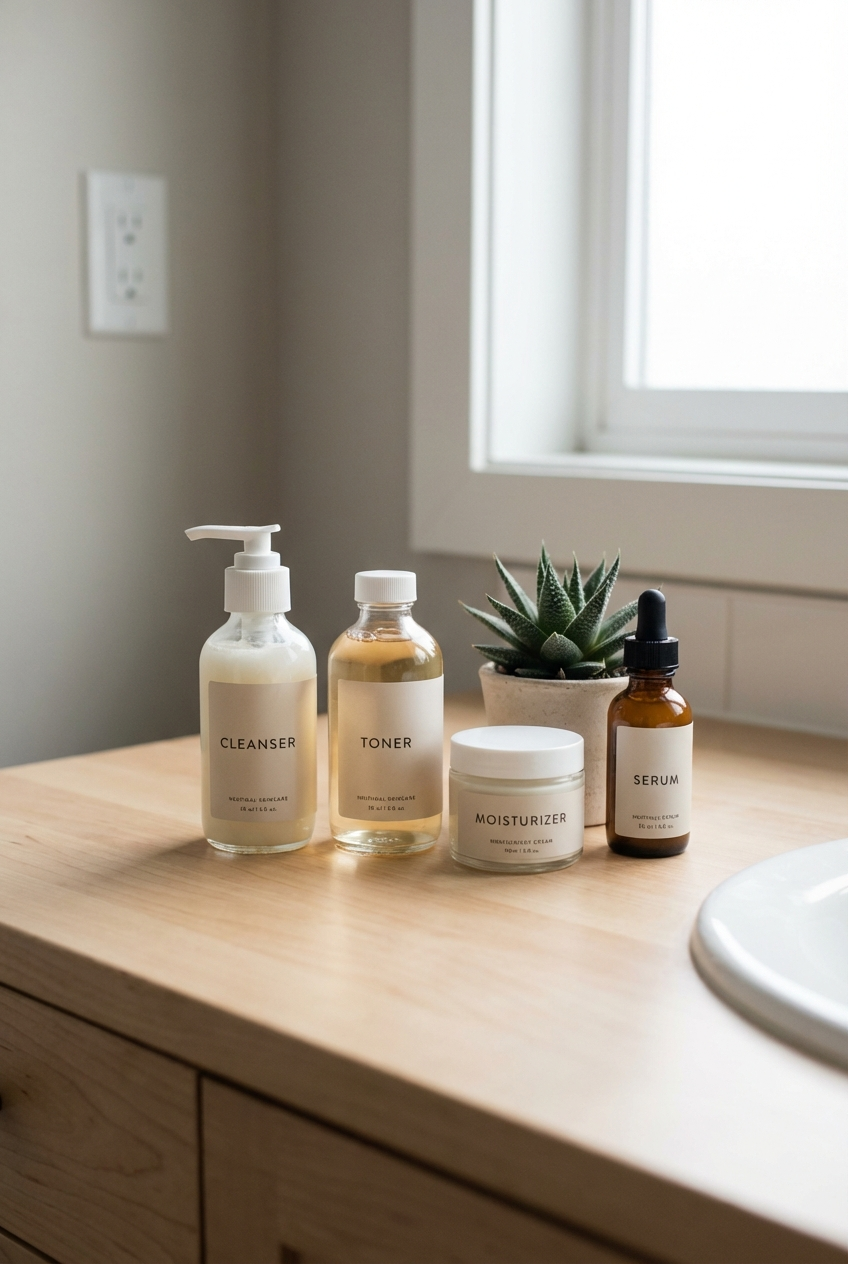
Notice none of these include toners, essences, ampoules, or the seventeen other product categories brands try to sell you. Unless you genuinely love having more steps, you don’t need them.
When Routines Fall Apart (And How to Recover)
You will have periods where your routine completely falls apart. Schedule changes, depression episodes, burnout, life chaos—it happens. Here’s how to get back on track:
Don’t try to restart with your full routine: Pick literally one thing. Just wash your face at night. That’s it. Do only that until it feels automatic again, then add the next step.
Keep an emergency kit: A package of face wipes and some moisturizer in a drawer somewhere can save you on nights when the full routine feels impossible.
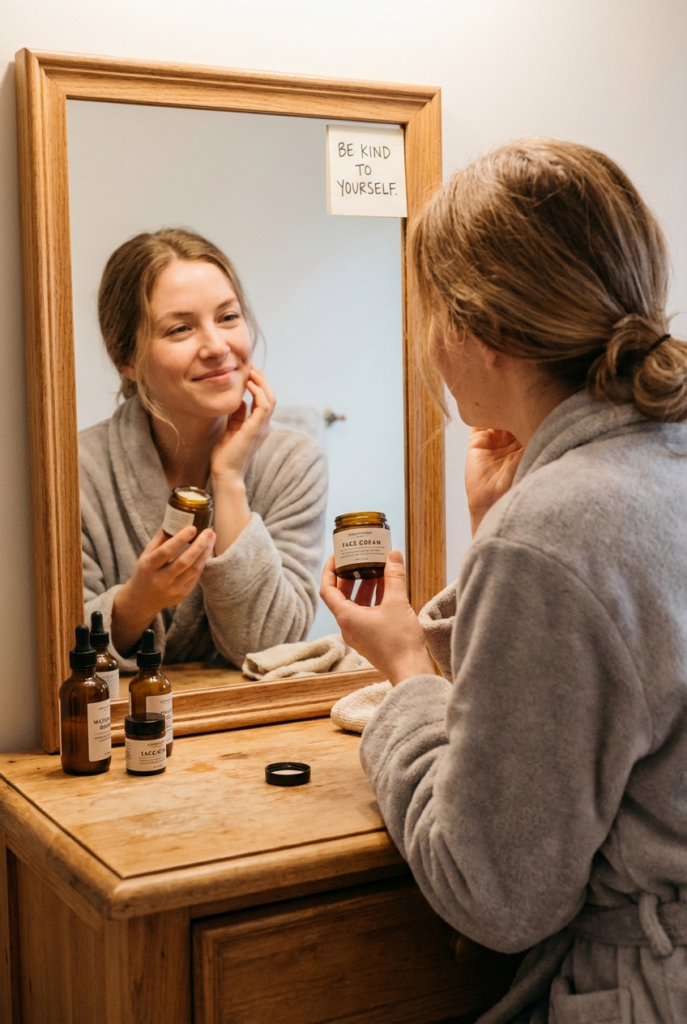
Forgive yourself: Your skin will recover. A few weeks of inconsistent skincare won’t ruin anything permanently. The guilt and shame about “failing” at skincare is more harmful than the actual missed routine.
Product Recommendations for Different Needs
Best for sensory sensitivities:
- Cleanser: CeraVe Hydrating Cleanser (creamy but rinses clean, fragrance-free)
- Moisturizer: Neutrogena Hydroboost Gel-Cream (lightweight, fragrance-free version available)
- Sunscreen: Skin Aqua UV Super Moisture Gel (Japanese sunscreen, lightweight, no white cast)
Best for executive dysfunction:
- All-in-one: CeraVe AM Facial Moisturizing Lotion with SPF 30 (moisturizer and sunscreen combined for mornings)
- Lazy cleansing: Garnier SkinActive Micellar Water (no-rinse option for exhausted nights)
- Simple treatment: The Ordinary Niacinamide 10% + Zinc 1% (one product that addresses multiple concerns)
Best budget-friendly options:
- Everything from CeraVe, Neutrogena, and The Ordinary
- Affordable drugstore skincare options often work just as well as expensive alternatives
The Bottom Line
Your skincare routine should reduce stress, not create it. If your current routine makes you feel guilty, overwhelmed, or like you’re constantly failing, it’s not the right routine for you—regardless of what beauty influencers say you “should” be doing.
Start simple, choose products that don’t irritate your senses, create systems that work with your brain, and remember that some skincare is always better than perfect skincare you never do. Your skin doesn’t care whether you’re following the latest viral routine—it just wants consistency, sun protection, and basic care.
And if anyone makes you feel bad for having a “simple” routine? They can mind their business. You’re doing great.
This post contains affiliate links, meaning I may earn from qualifying purchases at no extra cost to you. Have questions about building a neurodivergent-friendly routine or need help finding sensory-friendly products? Drop a comment below—I’d love to help you figure out what might work for your specific needs.