The Best Face Oils for Glowing Skin This Winter
Winter is officially here, and if you’re anything like me, your skin is already sending you distress signals. That tight, flaky feeling after washing your face? The dullness that no amount of moisturizer seems to fix? The weird dry patches that appear out of nowhere? Yeah, winter skin is real, and it’s not cute.
Here’s the thing though: face oils might just be your skin’s winter savior. I know, I know—if you have oily or acne-prone skin, the idea of putting more oil on your face sounds absolutely insane. But honestly, that’s exactly the misconception I used to have until I actually tried face oils. Turns out, they’re not the pore-clogging nightmare I thought they’d be. In fact, they might be the missing piece in your winter skincare routine.
Let me break down everything you need to know about face oils, which ones actually work for winter skin, and how to use them without looking like a grease ball.
Why Your Skin Desperately Needs Face Oils in Winter
Winter is basically a perfect storm of skin disaster. The cold air outside has zero humidity, while indoor heating systems are actively sucking moisture from the air (and your skin). Your poor skin barrier is getting absolutely demolished from both sides, losing water faster than you can say “winter skincare emergency.”
This is where face oils come in clutch. They work as emollients and occlusives, which basically means they soften your skin while creating a protective layer that locks moisture in. Think of face oil as your skin’s winter coat—it creates a barrier against harsh conditions while keeping all the good stuff (like hydration from your serums and moisturizers) sealed in tight.
But face oils do way more than just moisturize. The right oils are packed with fatty acids, vitamins, and antioxidants that actually repair your skin barrier, reduce inflammation, and boost cell regeneration. They can help with everything from fine lines to acne scars to general dullness. Plus, they give you that dewy, lit-from-within glow that’s basically impossible to achieve in winter without some help.
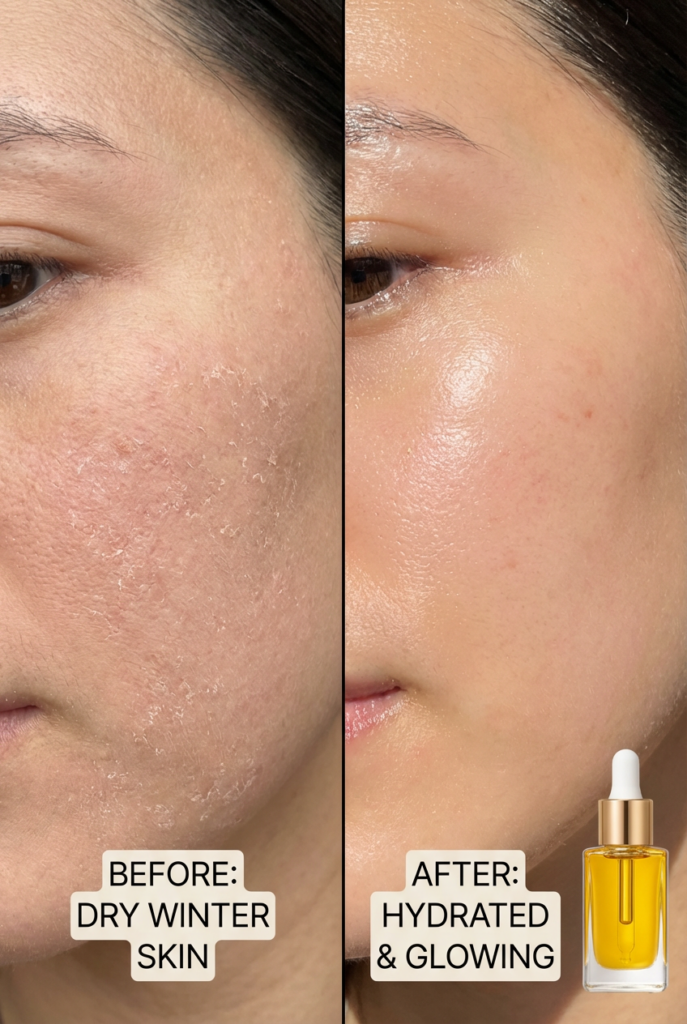
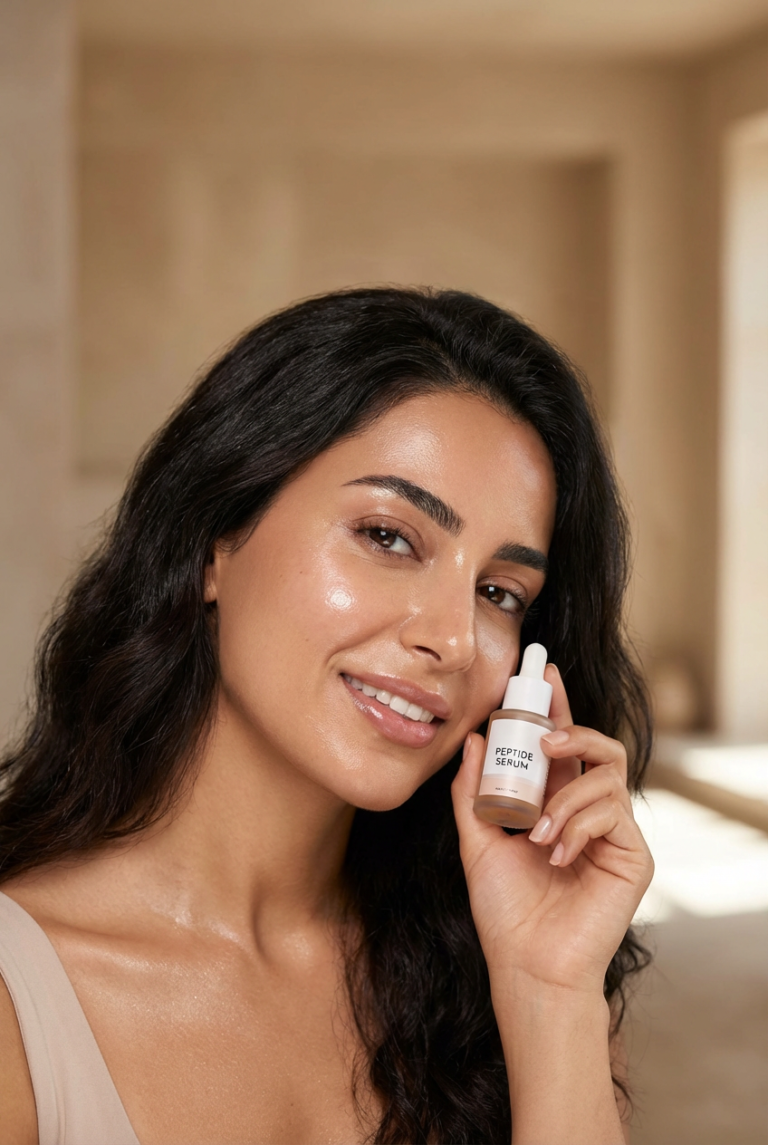
(Results are shown for demonstration purposes only. Actual results may vary.)
The Face Oil Lineup: Which One is Right for You?
Not all face oils are created equal, and choosing the right one depends on your skin type and concerns. Here are the heavy hitters that actually deliver results.
The Universal Favorite: Squalane Oil
Honestly, if there’s one face oil everyone should have in their routine, it’s squalane. This stuff is magic.
The Ordinary 100% Plant-Derived Squalane ($7-8) is hands-down one of the best drugstore beauty products ever made. It’s incredibly lightweight, absorbs instantly, and works for literally every skin type—including oily and acne-prone. Squalane mimics your skin’s natural oils, which means it provides deep hydration without clogging pores or leaving any greasy residue.
What makes squalane special is that it’s naturally present in our skin, but our production decreases as we age. Adding it back in helps support your skin’s moisture barrier without any of the heaviness you might associate with oils. It’s also incredibly stable, so it won’t oxidize and irritate your skin like some other oils can.
I use this stuff every single night, and my skin literally drinks it up. One reviewer on Amazon said it best: “I have sensitive, acne prone, oily/combination skin with rosacea and I have SUCH a hard time finding a traditional moisturizer…Enter The Ordinary Squalane Oil. This stuff is amazing.” For under $10, it’s genuinely life-changing.
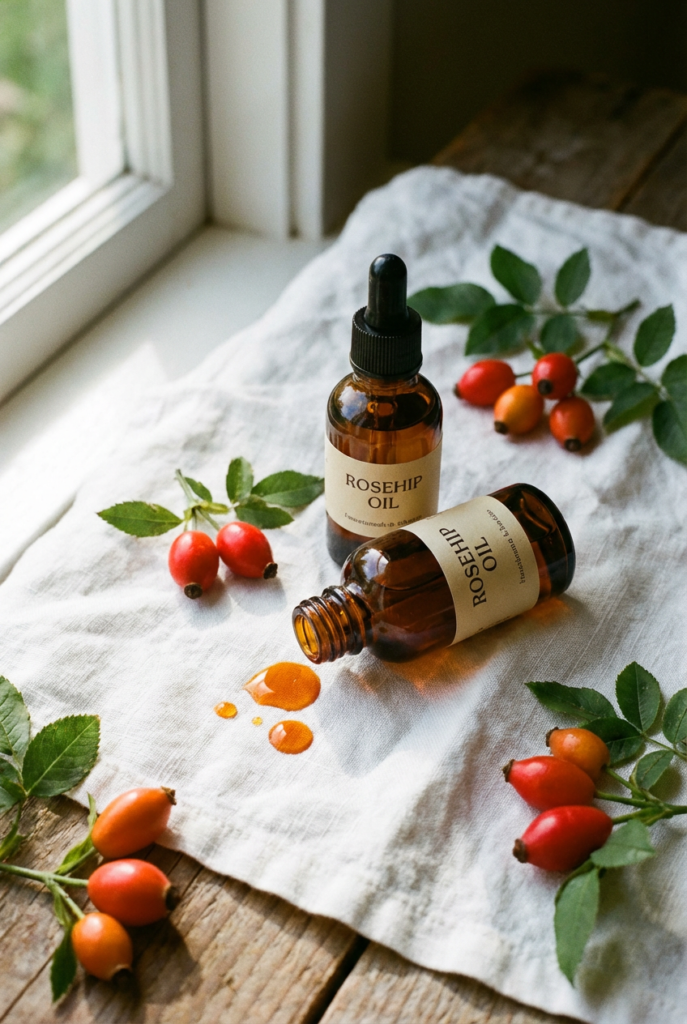
The Anti-Aging Powerhouse: Rosehip Oil
If you’re dealing with dull skin, hyperpigmentation, fine lines, or basically any sign of aging, rosehip oil needs to be in your life.
Trilogy Certified Organic Rosehip Oil ($17-20 for 0.68 oz) is the gold standard. This New Zealand-made oil is cold-pressed and packed with essential fatty acids (omega 3, 6, and 9), vitamins A and C, and natural retinol. It’s specifically designed to improve the appearance of scars, stretch marks, fine lines, and wrinkles while delivering deep nourishment.
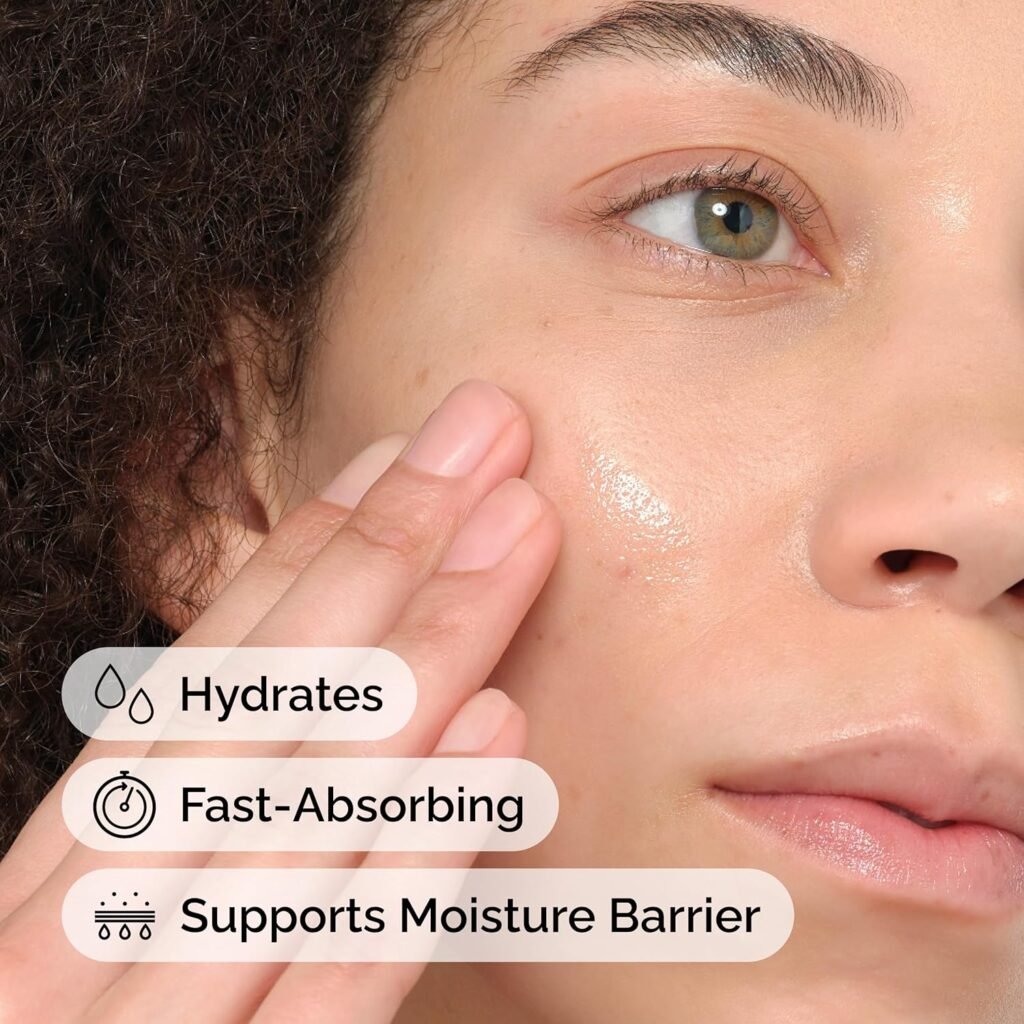
What I love about rosehip oil is that it’s surprisingly lightweight for how powerful it is. It absorbs quickly without leaving any residue or stickiness. The high linoleic acid content makes it particularly good for acne-prone skin—it actually helps balance sebum production instead of making you oilier.
For a more budget-friendly option, Cliganic Organic Rosehip Seed Oil ($10-13 for 4 oz) is USDA organic certified, cold-pressed, and completely pure. It’s non-GMO, vegan, and cruelty-free with no additives. You’re getting way more product for your money, and the quality is genuinely impressive for the price point.
Rosehip oil is particularly amazing for evening out skin tone and fading post-acne marks. The vitamin C content helps brighten your complexion, while the vitamin A supports cell turnover. If you want that healthy, radiant glow even in the dead of winter, rosehip is your friend. Check out our guide on How to Layer Skincare Products in the Correct Order to learn where face oils fit into your routine.
The Balancing Act: Jojoba Oil
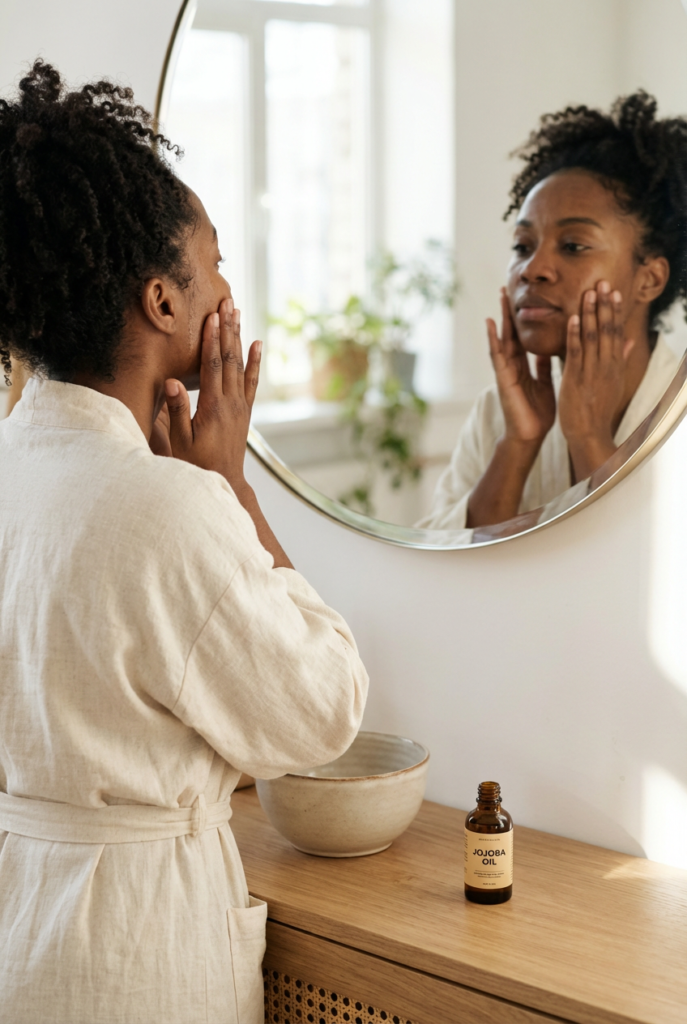
Jojoba oil is weirdly perfect for oily skin, which sounds completely counterintuitive but actually makes total sense once you understand how it works.
The molecular structure of jojoba oil is incredibly similar to your skin’s natural sebum. When you apply it, your skin basically thinks it’s already producing enough oil, so it stops overproducing. This means jojoba can actually help balance oily skin and reduce breakouts. Wild, right?
For pure jojoba oil, look for organic, cold-pressed options on Amazon. Many brands offer 100% pure jojoba oil in the $12-20 range for a 4 oz bottle. It’s suitable for all skin types and doubles as a great carrier oil if you want to mix in a drop of essential oils (though I’d recommend using it straight for skincare).
What makes jojoba particularly great for winter is that it’s rich in vitamins E and B complex, along with minerals like zinc and copper. These support skin healing and protection, which is crucial when your skin barrier is compromised from harsh weather. It also has natural antibacterial properties, making it excellent for preventing winter breakouts.
Use jojoba as a lightweight daytime oil or mix it with your regular moisturizer for an extra hydration boost. It absorbs quickly and won’t interfere with makeup application.
The Problem-Solver: Blue Tansy Oil
If your skin is angry—red, irritated, dealing with breakouts—blue tansy oil is about to become your new best friend.
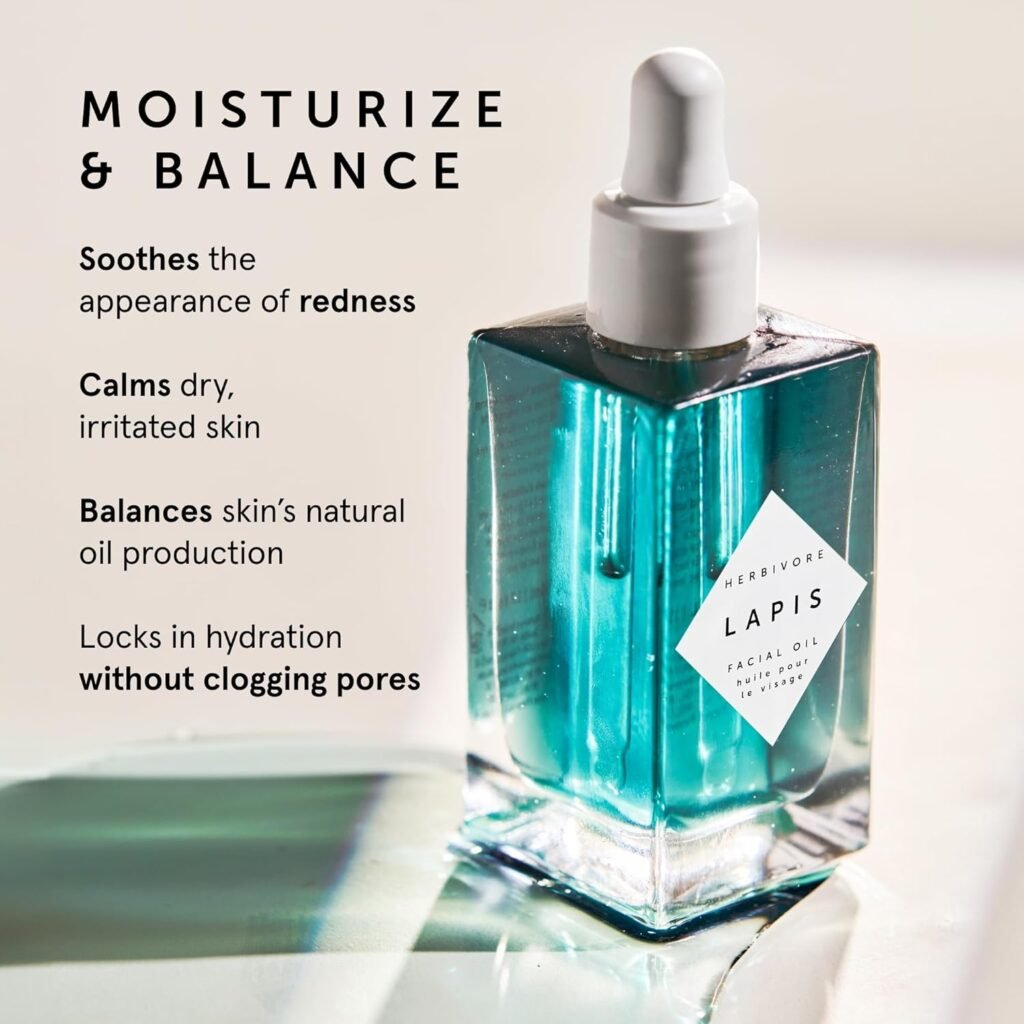
Herbivore Lapis Facial Oil is specifically formulated for combination, oily, and blemish-prone skin. The star ingredient is blue tansy, which contains azulene—a component known for soothing irritation, reducing redness, and balancing the complexion.
This oil also contains squalane for moisture barrier support and kukui nut oil, which is naturally high in linoleic acid to help balance sebum in acne-prone skin. The formula is non-comedogenic, which means it won’t clog your pores, and it’s completely free of silicone and fillers.
Here’s what makes Herbivore’s Lapis oil special: it’s designed for skin that needs both hydration and clarifying. You know that situation where your skin is simultaneously dry and breaking out? Yeah, this oil gets it. It provides deep moisture without the heaviness, helping your skin find the balance it needs.
One thing to note: blue tansy oil can vary in color from deep blue to green depending on light exposure, but this doesn’t affect its effectiveness. The color is just from the natural blue tansy, not any artificial dyes.
The Multi-Tasking MVP: Vitamin E Oil Blends
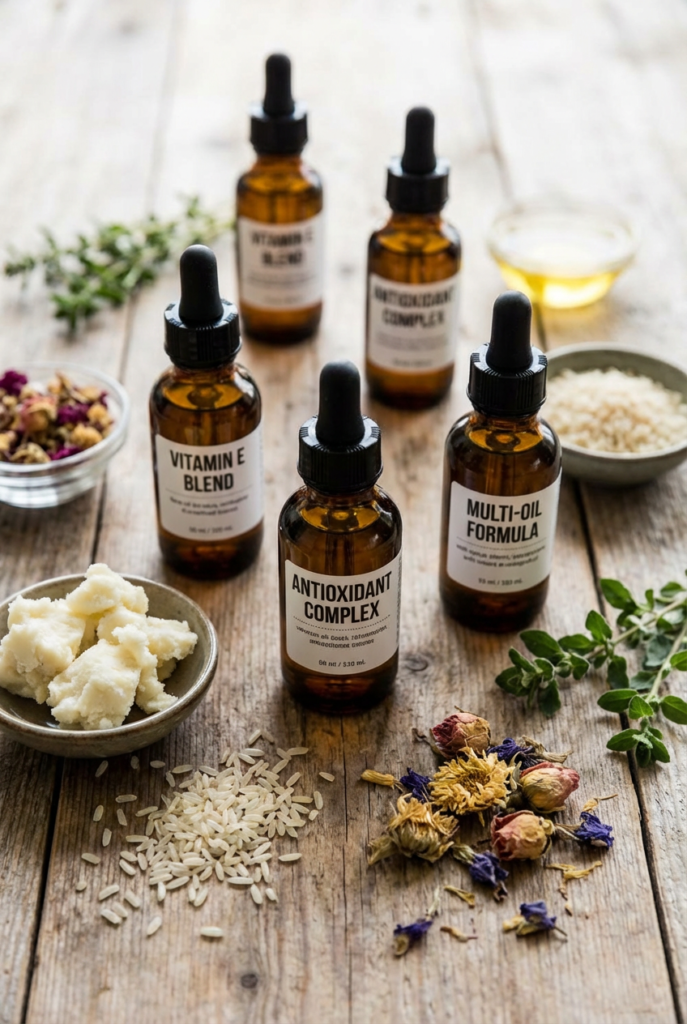
Sometimes you want the benefits of multiple oils without having to mix your own concoction. That’s where pre-blended vitamin E oils come in.
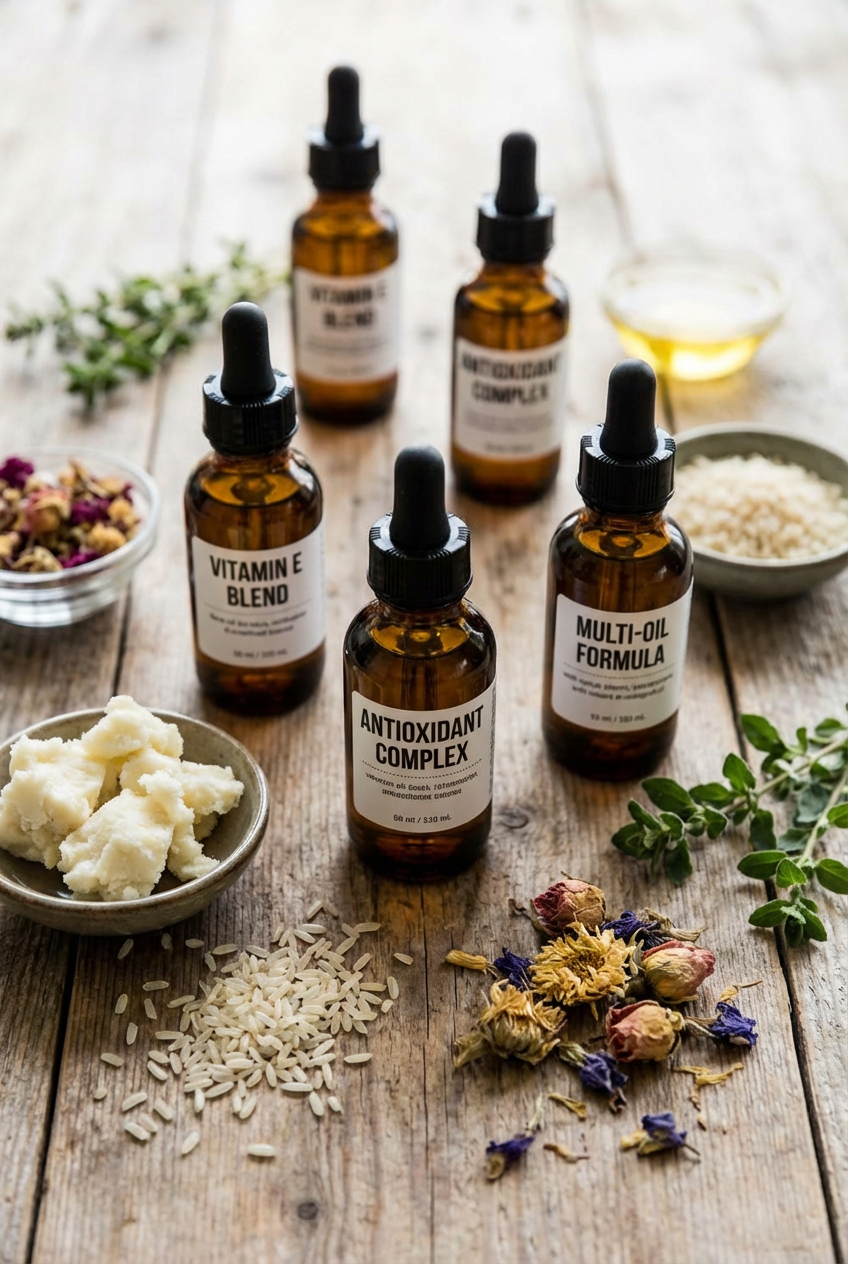
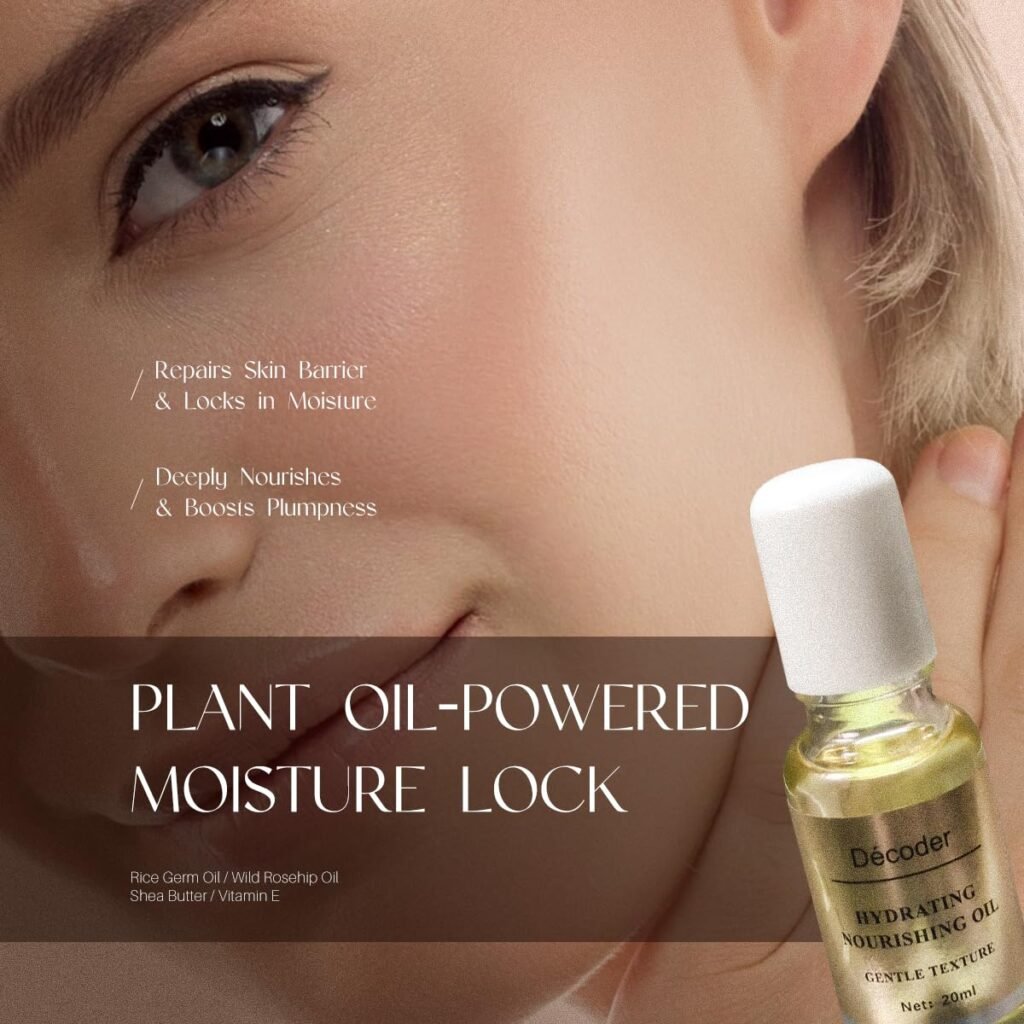
Decoder Vitamin E Oil Face Serum ($15-18) combines vitamin E, squalane, jojoba, rosehip, and rice germ oils in one formula. It’s basically a greatest hits album of face oils, and the precision roll-on applicator makes it super easy to use.
This type of blended oil is perfect for people who want multiple benefits without the fuss of layering several products. You’re getting antioxidant protection from vitamin E, hydration from squalane, balancing from jojoba, and brightening from rosehip—all in one bottle. The addition of shea butter provides extra nourishment, making it ideal for very dry winter skin.
The roll-on format is also great for targeted application. You can focus on dry areas, use it under your eyes, or apply it as a spot treatment for rough patches without wasting product.
How to Actually Use Face Oils (Without Looking Greasy)
Okay, so you’ve picked your oil. Now what? The application method matters way more than you’d think.
Timing is Everything
Face oils should typically be the last step in your skincare routine (but before SPF in the morning). Here’s the ideal order:
- Cleanser
- Toner
- Water-based serums (like vitamin C or hyaluronic acid)
- Face oil
- Moisturizer (optional—some people use oil instead of moisturizer)
- SPF (morning only)
Wait, oil before moisturizer? Yes! This might sound backwards, but water-based products can’t penetrate through oil. So if you want your serums to actually work, apply them first. Then use the oil to seal everything in.
That said, some people prefer to mix their oil with their moisturizer or apply it as the absolute final step. Your skin, your rules. Experiment and see what works best for you.
Less is Always More
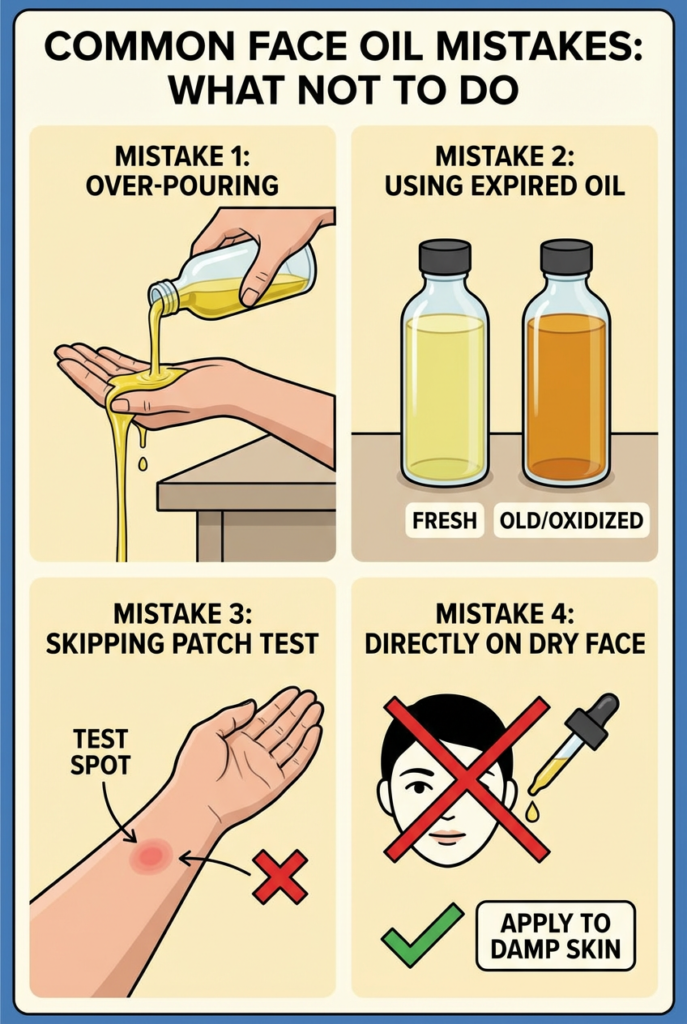
This is where most people mess up. You do NOT need a lot of face oil. We’re talking 2-3 drops for your entire face, maybe 4-5 if your skin is extremely dry or you’re using a particularly lightweight oil like squalane.
Here’s the technique: Warm the oil between your palms for a few seconds, then gently press it into your skin using your palms and fingers. Don’t rub—press and pat. This helps the oil absorb better and prevents tugging on your skin.

Strategic Application for Different Skin Types
For Dry Skin: Apply oil generously to damp skin right after your serum while your face is still slightly wet. The oil will help lock in that moisture. You can even do a weekly oil mask by applying a slightly thicker layer and leaving it on for 15-20 minutes before gently removing the excess.
For Oily Skin: Use lightweight oils like squalane or jojoba at night only. Apply just 2 drops to completely dry skin, focusing on areas that feel tight or dry. Your T-zone might not need any oil at all.
For Combination Skin: This is where targeted application shines. Use oil on your dry areas (usually cheeks and around the mouth) and skip your oily zones (typically the T-zone). You can also use different oils for different areas—something heavier on dry cheeks, something lighter everywhere else.
For Acne-Prone Skin: Choose non-comedogenic oils like jojoba, rosehip, or blue tansy. Apply at night after your acne treatments have absorbed. The oil won’t interfere with your actives and will help prevent the dryness that often comes with acne treatments.
Mixing It Up (Literally)
One of my favorite ways to use face oils is mixing them with other products:
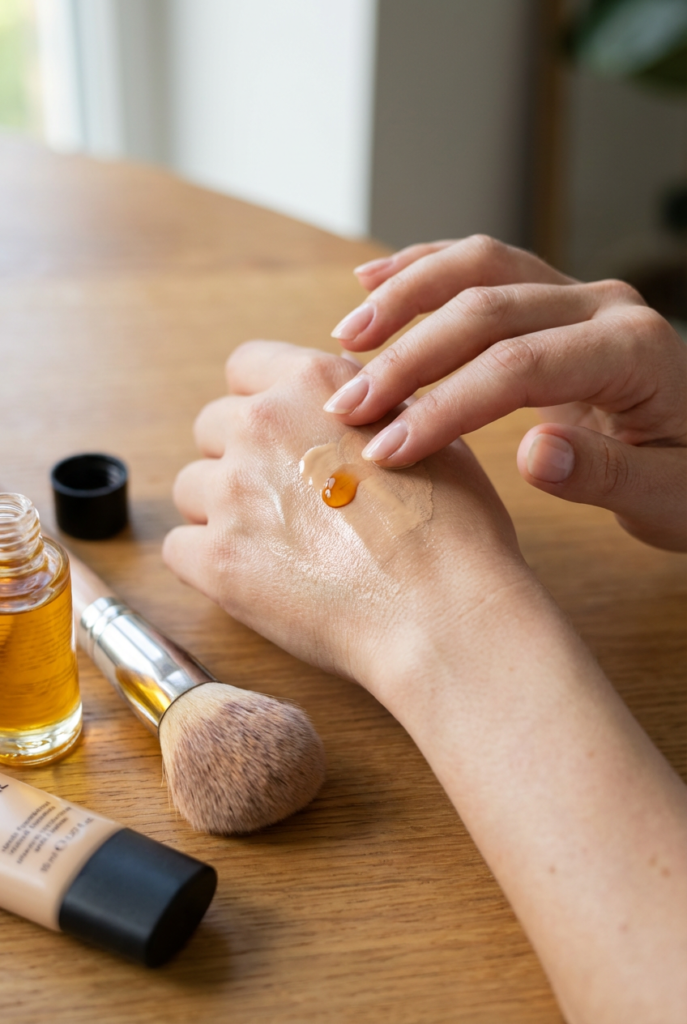
- Add 1-2 drops to your foundation for a dewy, natural finish (game-changer for winter makeup)
- Mix with your moisturizer if you’re not ready to use oil alone
- Combine different oils in your palm to create a custom blend (rosehip + squalane is my go-to)
- Add to your body lotion for extra hydration on super dry areas like elbows and knees
The possibilities are honestly endless once you get comfortable with oils.
Common Face Oil Mistakes to Avoid
Let me save you from the mistakes I made when I first started using face oils.
Using Too Much: More oil does not equal more hydration. It just equals greasy skin and potential breakouts. Start with way less than you think you need and add more only if necessary.
Skipping Patch Tests: Even natural oils can cause reactions. Test any new oil on your inner arm or jawline for 24 hours before putting it all over your face. This is especially important if you have sensitive skin or allergies.
Using Oxidized Oil: Oils can go rancid, especially if they’re exposed to light and heat. Store your oils in a cool, dark place (a medicine cabinet works great) and replace them every 6 months. If your oil smells off or has changed color, toss it.
Expecting Instant Results: Face oils aren’t magic. You’ll see some immediate hydration and glow, but the real benefits—like improved texture, fading scars, and reduced fine lines—take consistent use over several weeks. Stick with it.
Using Essential Oils Straight: Essential oils (like tea tree, lavender, eucalyptus) are NOT the same as carrier oils (like jojoba, rosehip, squalane). Essential oils are highly concentrated and can seriously irritate your skin if used undiluted. If you want to use essential oils, mix just 1-2 drops with a tablespoon of carrier oil.
Mixing Oils with Incompatible Actives: Some ingredients don’t play well together. For instance, vitamin C and retinol shouldn’t be used in the same routine. If you’re using active ingredients, research whether they’re compatible with oils or ask a dermatologist.
Face Oils for Different Winter Skin Concerns
Let’s get specific about which oils tackle which issues.
For Extreme Dryness and Flaking
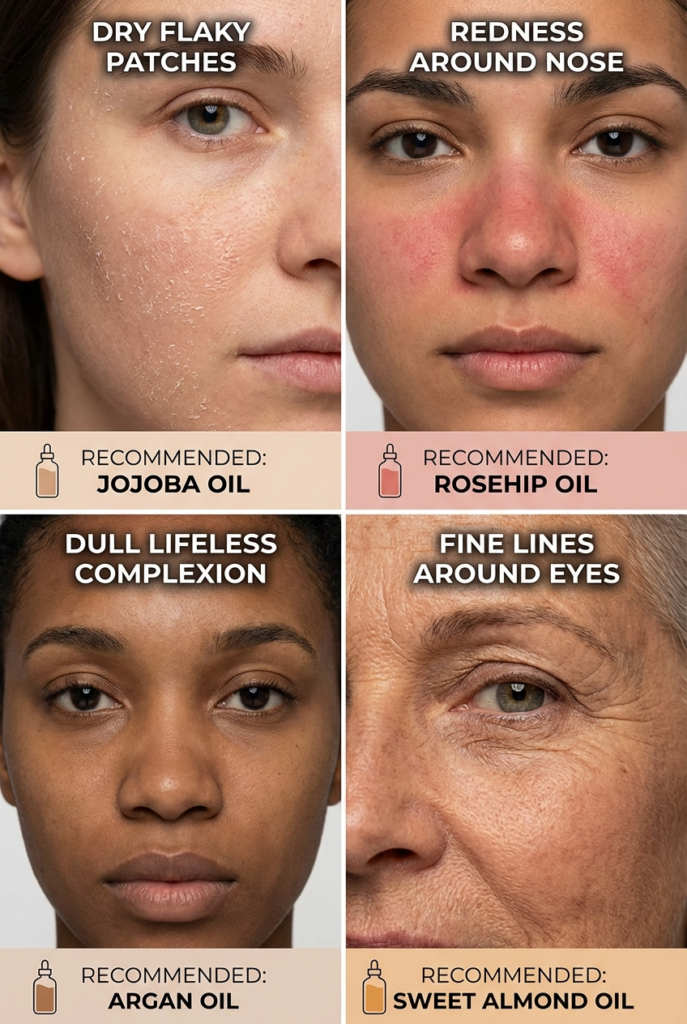
Winter dryness needs heavy-duty moisture. Look for oils rich in oleic acid, which is particularly nourishing for very dry skin. Argan oil, avocado oil, and marula oil are all excellent choices. Layer them over your hyaluronic acid serum for maximum hydration.
For Winter Redness and Sensitivity
Cold weather can trigger rosacea and general redness. Oils with anti-inflammatory properties work wonders here. Blue tansy (like in Herbivore Lapis), sea buckthorn oil, and calendula-infused oils can help calm irritated skin and reduce visible redness.
For Dull, Tired-Looking Skin
When your complexion looks gray and lifeless (thanks, winter), you need oils packed with antioxidants and vitamins. Rosehip oil with its vitamin C content, marula oil rich in antioxidants, and pomegranate seed oil are all fantastic for restoring radiance.
For Winter Breakouts
Yes, winter breakouts are a thing! The combination of dry air and heavy moisturizers can clog pores. Stick with lightweight, non-comedogenic oils like jojoba, squalane, or grapeseed oil. These provide hydration without triggering acne.
For Fine Lines and Preventative Anti-Aging
Winter can make fine lines more visible due to dehydration. Oils rich in fatty acids and vitamins help plump the skin and support collagen production. Rosehip oil with its natural retinol, argan oil with vitamin E, and oils containing CoQ10 (like some formulations of Herbivore Phoenix) are all excellent choices.
The Budget-Friendly Face Oil Routine
You don’t need to spend a fortune to get glowing winter skin. Here’s how to build an effective oil routine on a budget:
Morning:
- The Ordinary 100% Plant-Derived Squalane ($7-8) – 2 drops after your serum
- Sunscreen (always!)
Night:
- Rosehip oil from Cliganic or another affordable brand ($10-13) – 3-4 drops as your final step
Total investment: Under $25 for both oils, which will last you months.
For extra budget points, you can buy single-ingredient oils in larger bottles from health food stores or Amazon. Just make sure they’re cold-pressed, organic, and specifically meant for skincare (not cooking oils, even though they’re technically the same thing—the refinement process matters).
When NOT to Use Face Oils
Real talk: face oils aren’t for everyone or every situation.
Skip oils if you have active breakouts. If you’re currently dealing with inflamed, pustular acne, wait until it calms down before introducing oils. The exception is targeted treatment oils specifically designed for acne, like blue tansy.
Be cautious with seborrheic dermatitis or fungal acne. Certain oils can actually feed the yeast that causes these conditions. If you have either, consult a dermatologist before adding oils to your routine.
Don’t use oils under certain makeup. Some makeup formulas don’t play well with oils and will slide right off or separate. If you’re using oil in the morning, give it at least 3-5 minutes to fully absorb before applying makeup.
Avoid oils if your skin barrier is severely damaged. Paradoxically, if your skin barrier is completely destroyed (burning, raw, extremely reactive), oils might be too much. In that case, focus on gentle barrier-repair creams with ceramides first, then introduce oils once your skin has calmed down.
The Bottom Line on Winter Face Oils
Face oils have genuinely transformed my winter skincare routine. My skin used to be a flaky, dull disaster every December, and now it actually looks healthy and glowing even in the coldest months.
The key is finding the right oil for your skin type and using it correctly. Start with one oil—I’d recommend The Ordinary’s Squalane if you’re new to oils since it works for everyone—and see how your skin responds. You can always add more oils or switch to different ones as you figure out what works best.
Remember, face oils aren’t magic potions. They work best as part of a complete routine that includes cleansing, serums, and SPF. But when used correctly, they’re the secret weapon that takes your skin from “surviving winter” to “actually thriving in winter.”
Your skin deserves to feel comfortable and look radiant all year round, not just in the humid summer months. Give face oils a shot this winter—your future glowing, hydrated self will thank you.
This post contains affiliate links. If you make a purchase through these links, I may earn a small commission at no extra cost to you. All product information and prices were verified as of December 2025, but availability and pricing may vary.